Hay Fever Season Is Here!

Provided by: Roger Friedman, MD (Allergist)

Hay Fever Season is Here – What Can You Do?

Ragweed pollen is the cause of allergic rhinitis that begins in early August and lasts until it frosts a few times, which kills the weed. Ragweed pollen is everywhere – especially in the woods, fields and in the center strip of highways. The pollen counts can be over a thousand, especially during the heavy pollination times (early in the morning and late afternoons).

The first strategy is avoidance of the pollen. You can do this by keeping the windows in the house closed and using the AC. When you exercise try to avoid early am and dusk.

We use a variety of medications to treat hay fever, including antihistamines, nasal steroids, nasal antihistamines and Singulair®. Each patient responds to these differently, so if one fails another may succeed. If these work then no further evaluation may be needed, but if patients continue to suffer it’s time to see your Allergist.

The diagnosis is usually confirmed by a visit to your Allergist where skin testing can guarantee that the proper problem is being treated. Immunotherapy or allergy shots are our most effective treatments, and can actually cure the problem.

Nosebleeds: A Major Nuisance

Provided by Ashish Shah, MD

Nosebleeds (epistaxis) are one of the most common issues seen by Ear, Nose and Throat doctors. Patients with recurrent nosebleeds have a strong desire to rid themselves of this issue, given that nosebleeds often occur at inopportune times and places and ruin clothing! The main risk factor is dryness, but the increasing use of blood thinning medication is also a strong risk factor. High blood pressure, allergic rhinitis, chronic sinus disease, nasal trauma and bleeding disorders are other possible factors.

Most commonly, nosebleeds arise from small pinpoint areas of mucous membrane blood vessel disruption, even in the case of a gushing nosebleed. You would be surprised how much bleeding can occur from a blood vessel the size of a pencil tip! You should be reassured that it is very rare that nosebleeds – even when severe – would represent any concerning intranasal process. The vast majority of nosebleeds occur on the septum, the cartilage structure that divides the nose into two passages. Nosebleeds in the back of the nose which drain primarily down to the throat are more commonly related to high blood pressure. Some of these nosebleeds can be severe and more difficult to manage.

The main treatment of nosebleeds is prevention. Consistent use of moisturizing products on the mucous membrane of the septum is key. Any number of products can be effective, including petroleum jelly and saline gel using a cotton swab. Alternatively, nasal saline spray can be used at least a few times daily. A humidifier is also advised when you have the heat on since all heat is dry. Encourage children to limit digging in their nose and moisturize scabs in the nose instead of trying to remove them.

An active nosebleed should be treated with pressure for about fifteen minutes by pinching the nostrils against the septum. Holding the bony upper nose is ineffective. Stuffing tissue paper in the nose will only pull a scab off when the paper is removed, causing the nosebleed to recur.

If a nosebleed is recurrent or persistent, then nasal cautery or packing may be necessary. An ENT physician at Ohio ENT and Allergy Physicians can often cauterize the offending source with chemical cautery using silver nitrate or electrocautery. Most children will tolerate chemical cautery in the office. If a nosebleed is profuse, sometimes packing the nose with a sponge-like material is necessary for a few days. Severe nosebleeds may need to undergo surgery or an interventional radiology procedure called embolization to occlude the blood vessel internally. The Otolaryngologists at Ohio ENT and Allergy Physicians are able to see patients with a history of nosebleeds in a timely manner to determine the best management for this troublesome issue.

Controversial Techniques and Allergy – Columbus, OH


Provided by Mehmet Basaran, MD (Allergist)

Western medicine that we practice in the United States is currently based on observation, testing, diagnosis and treatment. Observation includes physical examination and a thorough history. Testing is selected based on the patient’s history and suspected causes of the patient’s problems. At Ohio ENT and Allergy Physicians, the board certified Allergist uses testing techniques and laboratory techniques that are proven to be safe and relevant, based on scientific study and published in peer-reviewed journals. Then the results, correlated with observations and physical examination, and plans of therapy are discussed with the patient.

Allergy prick skin testing is still the most physiologic form of testing for allergy. Blood tests such as RAST and Immunocap testing are helpful in that they determine if there is sensitization to a particular allergen. It must be correlated with physical and clinical symptoms. Another proven method of testing for allergies is a challenge. This can be an environmental challenge and done in research settings where patients are exposed to known allergens by breathing it in, or a food challenge when patients ingest a small increasing amounts of the food in question.

There are many other tests available. Many have not been proven to be of any clinical significance. For example, IgG4 is touted as a test for food sensitivities. However, IgG4 to foods can be found in many people who have absolutely no problems with foods. Testing for food sensitivities using IgG4 has no proven clinical benefit, and often leads to very strict restrictive diets that are totally unnecessary and may be emotionally or physically harmful.

Other tests have absolutely no basis in science. These include ALCAT testing, NuTron testing, Mediator release test, sublingual testing, provocative testing, food immune complex testing, applied kinesiology, electro-dermal testing, Neurological Stress Reduction Therapy, and laser testing and treatment. This is by no means a complete list. Many of these techniques cloak themselves in scientific jargon and claim to be cutting-edge, but really depend upon a poor understanding of physiology and science in general.

Thyroid Nodules: When to do a needle biopsy

Provided by Darryl Willett, MD

At OhioENT and Allergy Physicians, we see a tremendous number of referrals for thyroid nodules. Many times, the patients are told by their primary care physician that they need a Fine Needle Aspiration Biopsy of their thyroid nodules to determine if they are cancerous or not. We do perform many Fine Needle Biopsies the same day as their initial appointment, but oftentimes, we may defer the biopsy or bypass the biopsy and go straight to surgery. This may confuse the patients who simply assumed that it was mandatory to see the surgeon for a Fine Needle Biopsy.

I would like to educate the public on the rationale that the thyroid surgeon goes through in their mind to determine what the best protocol might be for each patients’ needs. Understanding that in general, only 5% of all thyroid nodules are malignant may put the patient at ease, but there are certain nodule characteristics that may be more alarming and raise the index of suspicion for cancer than others.

  1. Nodules that for sure should be considered for Fine Needle Biopsy the same day as initial office visit with ENT Surgeon:
    • any single nodule between 1.0-1.5 cm in size (when there are not multiple nodules present in the remainder of the thyroid) that can be easily palpated or felt on exam
    • a large, purely cystic nodule (nodule consisting of fluid only) > 1.5 cm that can be easily palpated on exam
    • any single nodule on unhealthy patients whom the surgeon feels would not tolerate surgery well and would be better off monitored for nodule growth (elderly, sickly, significant cardiac/pulmonary/renal disease, etc.)
  2. Nodules that should bypass a Fine Needle Biopsy and go straight to surgery:
    • any nodule > 1.5 cm (the rationale is that once nodules grow larger than 1.5 cm, there is too much sampling error with a skinny little needle which may miss a cancer)
    • patient with a family history of thyroid cancer
    • patients with a history of radiation therapy to their neck region
    • patients that have multiple nodules throughout their thyroid gland where any of the nodules are > 1.5 cm (there are too many nodules to biopsy)
    • nodules that have microcalcifications (especially if the microcalcifications are in the rim of the nodule) since this has a much higher incidence of being cancerous
    • nodules > 1.5 cm that are considered “complex” (contains both a solid and fluid component) since this has a higher incidence of being cancerous
  3. Nodules that can be simply followed with repeat ultrasounds and can bypass Fine Needle Biopsy:
    • elderly or sickly patients (as noted above) and patients on blood thinners who would be too high risk for surgery and do not have a history of radiation to neck, family history of thyroid cancer, no microcalcifications in the rim of the nodule
    • single nodules < 1.0 cm
    • multiple nodules in the thyroid with all of them < 1.0 cm
  4. Patients who need to be scheduled for an Ultrasound-Guided Fine Needle Biopsy through the Radiology Department:
    • nodules that are > 1.0 cm, but cannot be felt on exam by the surgeon
    • nodules that are too close to the carotid artery to be safely biopsied in the office

*These guidelines are the opinion of a thyroid surgeon with 25-years experience and should only serve as a suggestion for planned treatment – each case should be considered individually.

Discussing why a patient may need to see an Audiologist when visiting an ENT

Tonsillectomy and Adenoidectomy

Provided by Darryl Willett, MD

Pediatric Tonsillectomy and Adenoidectomy (known as a T&A) is the second most common pediatric surgical procedure performed. There may be a variety of reasons your child might be referred to one of our Ear, Nose and Throat Specialists here at Ohio ENT and Allergy Physicians.

The more common reasons to be referred by your child’s Pediatrician, Family Physician or Dentist are: chronic tonsillitis (or strep throat), snoring, obstructive sleep apnea (where your child has pauses in their nighttime breathing, breath holding and gasping episodes), swallowing problems where they appear to be choking on food, chronic halitosis (bad breath), and chronic mouth breathing which can lead to misaligned teeth.

Complications are uncommon, but fewer than 1% of children can have bleeding after surgery. Most of the time, this is self-limiting and nothing further needs to be done, but on a rare occasion, your child may need to go back to surgery to have the bleeding stopped. Most children should expect to miss 1 week of school to recover.

Thousands of these procedures are performed annually in Central Ohio. The Surgeons at OhioENT and Allergy Physicians, collaborating with the finest Anesthesiologists, have performed nearly 21,000 pediatric tonsillectomies over the past 20 years at The Ohio Surgery Center.

The Ohio Surgery Center was the first-of-its-kind Single Specialty All-Ear, Nose and Throat Surgery Center in the country. Their safety record is unsurpassed, receiving only the highest accolades from the national governing board, JCAHO (Joint Commission on Accreditation of Healthcare Organizations). Our surgeons are Board Certified and have received an extensive 5 years of tonsillectomy training of all age groups in their residencies and work alongside anesthesiologists who have also received pediatric training with Board Certified Pediatric Fellowship Trained Anesthesiologists on staff.

Ear Infections and Ear Tubes

Provided by Michael J. Loochtan, MD

Ear infections are one of the most common disorders to that affect children. These can often be managed with medication without the need for further intervention. Sometimes, however, your child’s doctor may recommend that your child have an evaluation with an otolaryngologist. Below is an explanation of what ENTs are, a discussion of normal ear anatomy, and an explanation of when ear infections may warrant consideration for ear tube placement.

WHAT IS AN OTOLARYNGOLOGIST (ENT)?
An ENT is a doctor who is specially trained to diagnose and treat disorders of the ears, nose, and throat medically or surgically if needed. Therefore, they are also called head & neck surgeons. It’s a mouthful to say “Otolaryngologist – Head & Neck Surgeon” therefore usually we just go by “ENT.” ENT training is quite rigorous and entails 4 years of medical school after college, followed by 5 years of residency training. Some ENTs pursue additional specialized training after residency. This extra training is called a fellowship and is usually 1-2 years in length.

WHAT ARE THE PARTS OF THE EAR?
Please see the diagram below.
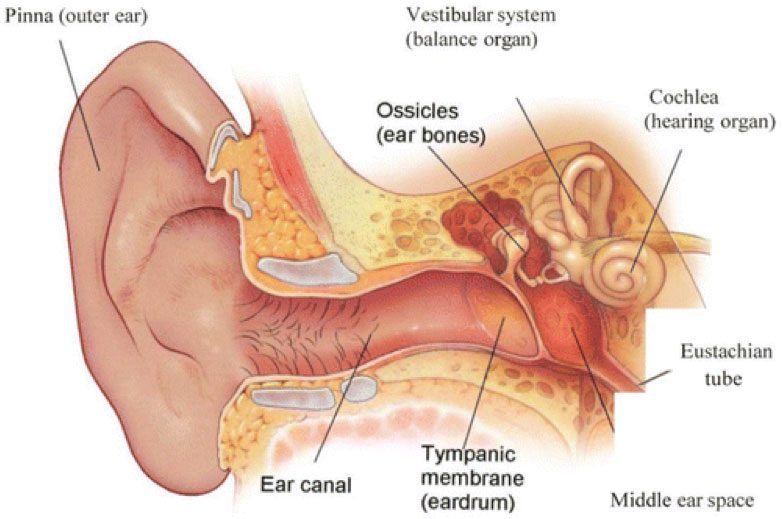
Rosenfeld1

Rosenfeld RM. A Parent’s Guide to Ear Tubes. Hamilton, Ontario, Canada: BC Decker; 2005. Reproduced with permission.

Outer Ear
When many people think of ears, they think of the part they can see. This is called the auricle or pinna. This is the part of the ear that we can see with our naked eyes without any special instruments. This part of the ear is made up of skin that tightly surrounds a cartilage scaffolding. The bottom part of your auricle is called the lobe (or lobule), and is made up of skin and fatty tissue. This is the part of the ear that is most commonly pierced by earrings. In the center of your outer ear is a small hole called the external auditory canal (ear canal) which is a small tunnel that leads to the ear drum (tympanic membrane). Even though you cannot see most of the ear canal, this is also part of the outer ear. The ear canal is lined by skin, beneath which the outer portion is cartilage and the deeper portion is bone. This portion of the ear is where earwax (cerumen) is made.

Middle Ear
The ear canal leads to the ear drum (tympanic membrane). The ear drum protects the middle and inner ear structures from the outside world. The ear drum is also connected to one of the ear bones called the malleus. The ear drum amplifies sound that is directed from the outer ear and transmits this sound to the ear bones (ossicles) which then transmit sound to the inner ear. Connected to the middle ear is a special tunnel called the Eustachian tube. This tube is primarily composed of cartilage and is connected to the muscles in the back of the throat. This tube opens into the back of the nose at the junction of the nose and throat in a region called the nasopharynx. The Eustachian tube opens and closes many times per day to allow air into and out of the middle ear space (behind the ear drum). This is the same tube that opens and closes when you ride on an airplane and feel you ears “pop.” In many children and some adults, sometimes these tubes do not function properly, and can result in Eustachian tube dysfunction (ETD). This results in the accumulation of fluid in the middle ear and is known as otitis media. This fluid can cause hearing loss, balance problems, ear discomfort, or other symptoms.

Inner Ear
The inner ear is composed of a snail shaped bone called the cochlea as well as bony balance canals (semicircular canals). The third ear bone (stapes or stirrup) fits into the inner ear like a piston its vibration moves fluid in the inner ear which then creates an electrical signal that travels to the brain via the cochlear nerve (hearing nerve). Your brain then interprets this signal as sound.

Below is some very helpful information from the American Academy Of Otolaryngology – Head and Neck Surgery (AAO-HNS) regarding ear tubes (reproduced with permission). More information can be found at https://www.entnet.org//content/ear-tubes

Painful ear infections are a rite of passage for children and by the age of five, nearly every child has experienced at least one episode. Most ear infections either resolve on their own (viral) or are effectively treated by antibiotics (bacterial). But sometimes ear infections and/or fluid in the middle ear may become a chronic problem leading to other issues, such as hearing loss, poor school performance, or behavior and speech problems. In these cases, insertion of an ear tube by an otolaryngologist (ear, nose, and throat specialist) may be considered.

According to the American Academy of Otolaryngology – Head and Neck Surgery, “consultation with an otolaryngologist may be warranted if you or your child has experienced repeated or severe ear infections, ear infections that are not resolved with antibiotics, hearing loss due to fluid in the middle ear, barotrauma, or have an anatomic abnormality that inhibits drainage of the middle ear.”

WHAT ARE EAR TUBES?
Ear tubes are tiny cylinders placed through the ear drum (tympanic membrane) to allow air into the middle ear. They also may be called tympanostomy tubes, myringotomy tubes, ventilation tubes, or PE (pressure equalization) tubes.

These tubes can be made out of various materials and come in two basic types: short-term and long-term. Short- term tubes are smaller and typically stay in place for six to eighteen months before falling out on their own. Long-term tubes are larger and have flanges that secure them in place for a longer period of time. Long-term tubes may fall out on their own, but removal by an otolaryngologist may be necessary.
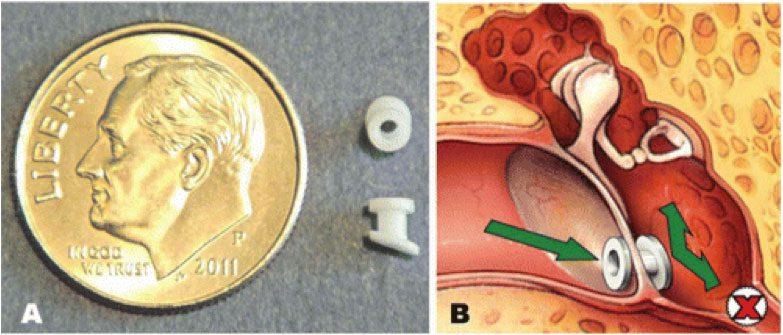
Rosenfeld2
Rosenfeld RM. A Parent’s Guide to Ear Tubes. Hamilton, Ontario, Canada: BC Decker; 2005. Reproduced with permission.

WHO NEEDS EAR TUBES AND WHY?
Ear tubes may be recommended when a person experiences repeated middle ear infection (acute otitis media) or has hearing loss caused by persistent middle ear fluid (otitis media with effusion). These conditions most commonly occur in children, but can also be present in teens and adults and can lead to speech and balance problems, hearing loss, poor school performance, or changes in the structure of the ear drum. Other less common conditions that may warrant the placement of ear tubes are malformation of the ear drum or eustachian tube, Down Syndrome, cleft palate, and barotrauma (injury to the middle ear caused by a reduction of air pressure, usually seen with altitude changes as in flying and scuba diving).

Each year, more than half a million ear tube surgeries are performed on children, making it the most common childhood surgery performed with anesthesia. The average age for ear tube insertion is one to three years old. Inserting ear tubes may:

HOW ARE EAR TUBES INSERTED IN THE EAR?
Ear tubes are inserted through an outpatient surgical procedure called a myringotomy. A myringotomy refers to an incision (small opening) in the ear drum or tympanic membrane, which is most often done under a surgical microscope with a small scalpel. If an ear tube is not inserted, the hole would heal and close within a few days. To prevent this, an ear tube is placed in the hole to keep it open and allow air to reach the middle ear space (ventilation).

WHAT HAPPENS DURING SURGERY?
Most young children require general anesthesia but some doctors can do this as a brief office procedure. Some older children and adults may also be able to tolerate the procedure without anesthetic. A myringotomy is performed and the fluid behind the ear drum (in the middle ear space) is suctioned out. The ear tube is then placed in the opening. Ear drops may be administered after the ear tube is placed and may be prescribed for a few days. The procedure usually lasts less than 15 minutes and patients recover very quickly.

Sometimes the otolaryngologist will recommend removal of the adenoid tissue (lymph tissue located in the upper airway behind the nose) when ear tubes are placed for persistent middle-ear fluid. This is effective for children four years or older and is often considered when a repeat tube insertion is necessary. Current research indicates that removing adenoid tissue concurrent with placement of ear tubes for persistent middle-ear fluid can reduce the risk of recurrent ear infections and the need for repeat surgery in children four years and older.

WHAT HAPPENS AFTER SURGERY?
After surgery, the patient is monitored in the recovery room (if general anesthesia was used) and will usually go home within an hour or two if no complications occur. Patients usually experience little or no postoperative pain, but grogginess, irritability, and/or nausea from the anesthesia can occur temporarily. When done in the office recovery is immediate.

Hearing loss caused by the presence of middle ear fluid is immediately resolved by surgery. Children with speech, language, learning, or balance problems may take several weeks or months to fully improve.

The otolaryngologist will provide specific postoperative instructions, including when to seek attention and to set follow-up appointments. He or she may also prescribe an antibiotic ear drops for a few days. An audiogram should be performed after surgery, if hearing loss is present before the tubes are placed. This test will make sure that hearing has improved with the surgery.

Although the tube does have a small opening (about 1/20th of an inch) that could allow water to enter the middle ear, research studies show no benefit in keeping the ears dry and current guidelines do not recommend routine water precautions. Therefore, you do not need to restrict swimming or bathing while tubes or in place and do not need to use earplugs, head bands, or other water-tight devices unless specifically recommended by your doctor.

POSSIBLE COMPLICATIONS
Myringotomy with insertion of ear tubes is an extremely common and safe procedure with minimal complications. When complications do occur, they may include:

A Cold That Won’t Go Away – Is it Just “A Cold”? (continuation)

Provided by Evan Tobin, MD
and Roger Friedman, MD

If your child has tried antihistamines and/or nasal steroids but their symptoms did not improve, the pediatrician may send a referral to a specialist.

Which specialist? An Allergist or an ENT (Ear, Nose and Throat)?

At Ohio ENT & Allergy Physicians, both specialties work together to sort these problems out.  At one of our 10 convenient locations, a pediatric patient with chronic nasal and sinus symptoms can be evaluated for both adenoid problems and allergies. Testing will include routine allergy testing, a thorough physical exam and sometimes the use of a small flexible endoscope to evaluate the nasal passages and check the size of the adenoids. This scope also allows diagnosis of other problems such as a nasal foreign body, a polyp, or a deviated nasal septum (which is rare in children).

Medical treatment may be tried again by our specialists. This may include stronger nasal sprays, antihistamines, antibiotics or allergy shots (immunotherapy).

If this treatment is still not effective, surgical treatment may be offered. This may include removal of the adenoids and treatment of the nasal swellings called “turbinates”.  Sometimes tonsillectomy or ear tube insertion may be necessary, as well. (These will be discussed in a future blog.)

These surgeries would likely be done at The Ohio Surgery Center, an accredited, outpatient surgery center staffed by anesthesiologists and nurses with extensive pediatric experience and training. The recovery is usually quite fast with minimal discomfort.

Though up to 90% of children will be effectively treated by addressing allergies and adenoid problems, a small number will continue to have problems. This is where it is extremely beneficial to have the two specialists working together. The allergist will look for more unusual allergies including food allergies or asthma and check the patient’s immune system to make sure it is working properly. The ENT doctors will look for nasal problems such as polyps or chronic sinus infections, utilizing a very low radiation office CAT scanner, when necessary. Having the CAT scan done in the office allows for a convenient “less scary” seated CAT scan (similar to a dental X-RAY). An office scan is also much less expensive than a hospital scan.

A child with a cold is not a pleasant experience. But a cold that never goes away is a sign of a medical problem that requires further evaluation. Once the cause has been determined effective treatment can be offered. This may require allergy treatment, treatment for enlarged adenoids or both.

At Ohio ENT & Allergy Physicians, we have specialists to deal with both allergy problems and adenoid problems in a convenient outpatient setting and in a cost-effective manner.

A Cold That Won’t Go Away – Is it Just “A Cold”?

Provided by Evan Tobin, MD
and Roger Friedman, MD

Young children are more susceptible to upper respiratory infections (aka “URI” or “common cold”) because they are still growing, their immune systems are still maturing, and they are exposed to more viral infections through daycare and early school years.

The symptoms of a cold are well known to all of us. The symptoms include cough, runny nose, nasal congestion and sometimes a low-grade fever.

Some children, however, seem to have a “never ending cold”. They may mouth breathe, snore loudly and have a constant runny nose.

Two common problems of childhood can explain these nasal symptoms that simply won’t go away.

  1. Allergies
  2. An enlargement or infection of the adenoids


There are similarities between these two conditions. Both can cause chronic congestion and runny nose. These two problems can also overlap, both being present in the same patient.  If left untreated, the child may develop sleep and behavior problems and alteration in facial or dental development from long-term mouth-breathing.

Allergies can be seasonal or can be year-round. Seasonal allergies can include reactions to grasses, trees and ragweed, to name a few. Year-round allergies include allergies to pets, dust and mold. In addition to nasal congestion and runny nose, which is usually clear drainage, there can be sneezing, itchy eyes and sensitive skin. Children with allergies are also at higher risk to develop asthma. Initial treatment involves use of antihistamines and sometimes nasal steroid sprays, under the guidance of the patient’s pediatrician.

If the patient is not responding to medical treatment, consideration should be given to other potential causes, the most common of which is enlargement or chronic infection of the adenoids. The adenoids are a collection of immune system tissue – called “lymphoid tissue”. The adenoids are present in the location where the nose joins the throat, called the “nasopharynx”. This tissue helps to fight infection, but can itself become infected and enlarged. When that occurs, symptoms such as nasal congestion, mouth breathing, snoring, restless sleep and runny nose can occur. These symptoms can become severe enough that they can mimic or even cause a sinus infection.  Ear problems can also occur.

When adenoid enlargement is suspected by the pediatrician, nasal steroids can be tried. This medication will sometimes decrease the size of the adenoids and improve symptoms. The use of nasal saline may also help. Antihistamines typically will not work if there are no allergies present.

If your child has tried antihistamines and/or nasal steroids but their symptoms did not improve, the pediatrician may send a referral to a specialist.

(July’s BLOG will have the continuation of this article,  focusing on when it might be time to see a specialist for these continued symptoms.)

Immunotherapy (allergy shots): The differences in the Build-Up Phases

Provided by David Hauswirth, MD

What is the difference between immunotherapy (IT) and Cluster immunotherapy?

Immunotherapy (“allergy shots”) is a treatment for allergies.  The patient is given gradually increasing doses of allergen (substance that causes your allergies), trying to make them tolerant or not allergic.  There are typically two phases to immunotherapy, build-up and maintenance.  For any build-up type (traditional, Cluster, etc.), the length of treatment is the same, typically 3-5 years.  The difference between Cluster and traditional immunotherapy is the buildup phase.  

With Cluster immunotherapy, the build-up phase is accomplished slightly more quickly, hopefully reaching a higher dose and relief a little quicker. This is accomplished by receiving a few shots each session and making larger changes in the dose.  With all types of immunotherapy, there is a risk of an allergic reaction when receiving a shot.  The risk with Cluster immunotherapy is slightly higher than traditional buildup schedules.

Cluster allergy shots are different from “Rush” immunotherapy.  “Rush” immunotherapy is an attempt to do the whole buildup in a day or two.  There is a much higher risk of a systemic reaction with this type of treatment.  “Rush” therapy is done when someone really needs to get rapid protection, such as a life threatening venom allergy.

Does Cluster immunotherapy work better than traditional immunotherapy?

Cluster IT is not better, but it may work more quickly.  All build-up programs have the same final result.  The only difference is how quickly you reach the maintenance dose.  A patient on Cluster, a patient on “Rush”, and a patient on traditional immunotherapy will all be on the treatment for 3-5 years and will have the same outcome, regardless of the build-up schedule.  Benefit for any immunotherapy program is based on the time it takes for your immune system to shift away from allergy responses after you reach maintenance.

Is Cluster immunotherapy safe?

Yes.  With all types of immunotherapy there is a risk of anaphylaxis or a systemic allergic reaction.  The faster you increase the dose, the more risk of a reaction.  Therefore, a slower traditional buildup has the lowest rate of reaction.  Cluster buildup has a rate of reaction slight above traditional.  “Rush” immunotherapy has a higher rate of anaphylaxis than either of these other two types.

Does the The American Academy of Allergy, Asthma & Immunology (AAAAI) have statements, either way, about the use of accelerated schedules for immunotherapy?

No system of build-up is endorsed by the AAAAI.  Cluster and rush immunotherapy are used in specific situations when the doctor and patient feel it is appropriate to do so and is safe.  They are not appropriate for everyone.  Very accelerated build-up (“Rush”) is only FDA approved for venom immunotherapy.  This is a specific situation where a rapid push to maintenance is necessary for a life-threatening venom allergy (bee sting). Cluster and rush immunotherapy are not FDA approved and are considered off-label use.  Speak with your doctor if you are interested in more information on immunotherapy.

Top